Wind Turbine Rescue Systems: Selecting the Right Equipment & Training
Selecting the Right Rescue and Descent System for the Wind Energy Industry
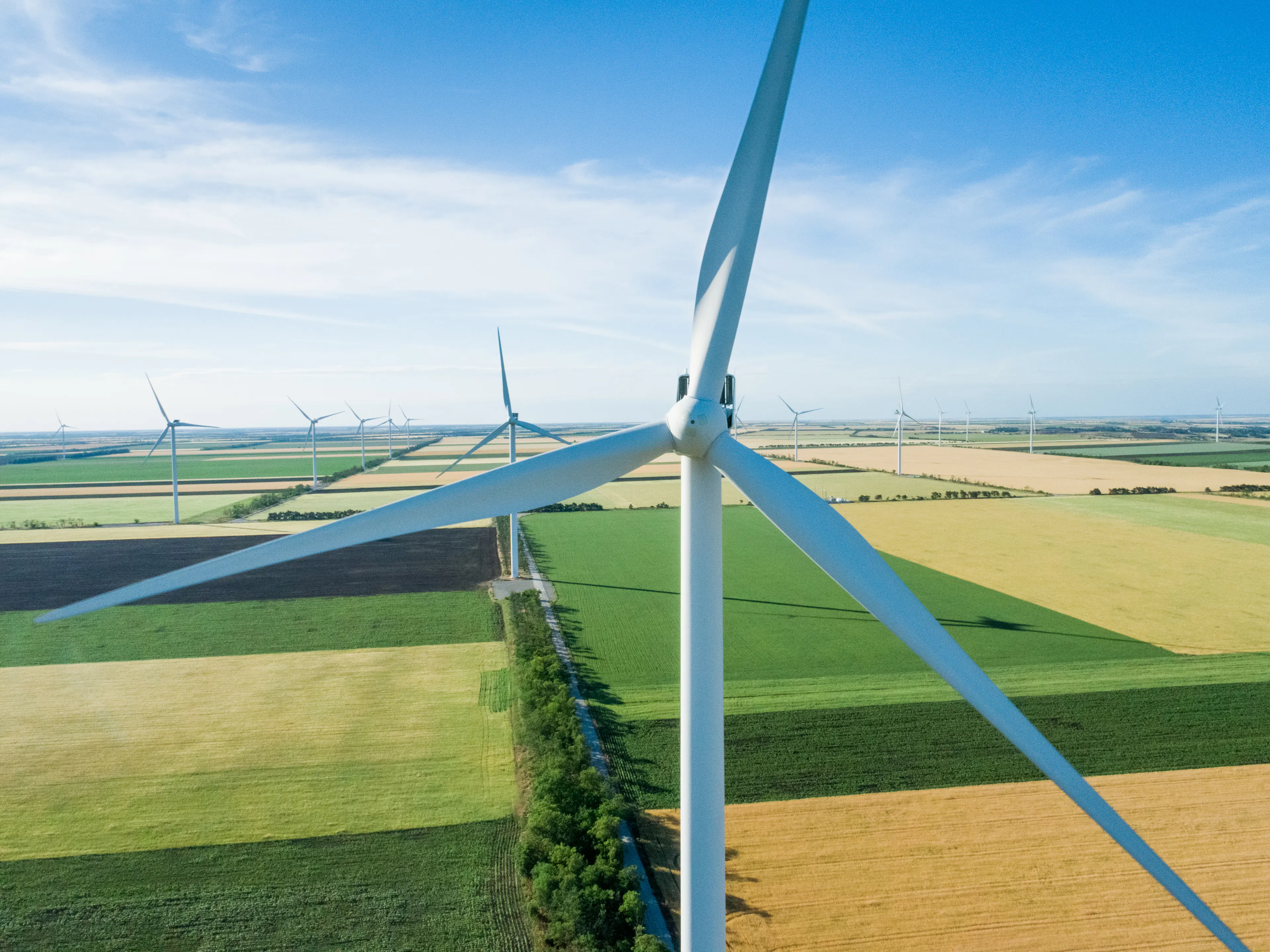
Wind turbines continue to grow taller, more powerful and more complex. For the technicians responsible for maintaining them, that means working hundreds of feet above the ground in environments where conventional emergency response may not be immediately available.
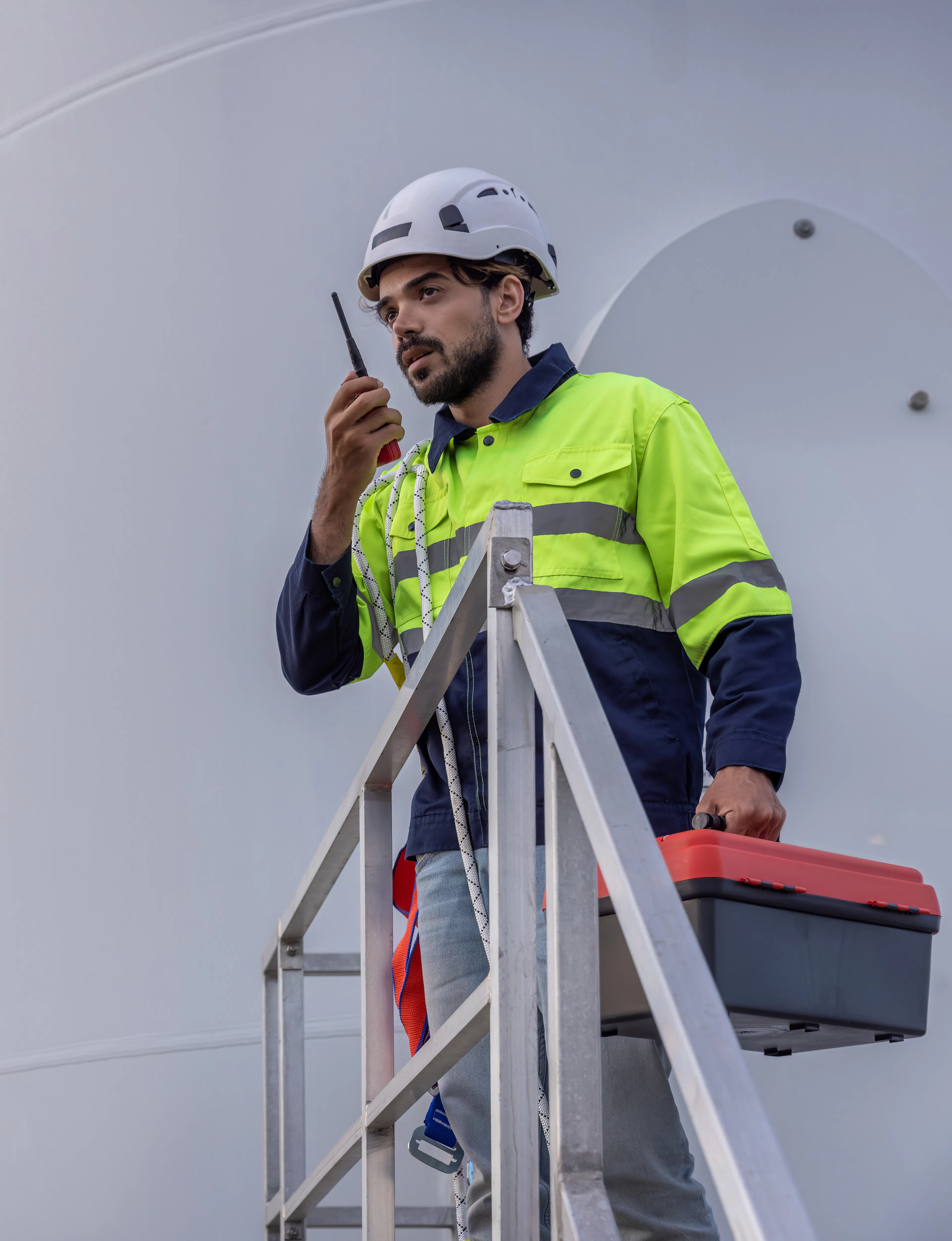
When an incident occurs at height, having fall protection in place is only part of the equation. Employers and technicians also need a practical plan for evacuation, self-rescue and assisted rescue.
But selecting a rescue system for the wind energy industry isn't as simple as choosing a piece of equipment from a catalog.
The better question isn't:
"What is the best rescue system for wind energy?"
It's:
"What rescue system is appropriate for our turbines, technicians and potential rescue scenarios?"
Why Wind Turbine Rescue Requires Planning
No two wind farms are exactly alike.
Turbine height, tower configuration, nacelle design, ladder systems, platforms, anchor locations and access points can vary significantly between manufacturers and turbine models. Offshore wind introduces another layer of environmental and logistical challenges.
A rescue solution that works effectively in one location may not be appropriate for another.
No two wind farms are exactly alike.
Turbine height, tower configuration, nacelle design, ladder systems, platforms, anchor locations and access points can vary significantly between manufacturers and turbine models. Offshore wind introduces another layer of environmental and logistical challenges.
A rescue solution that works effectively in one location may not be appropriate for another.
Before selecting equipment, employers should evaluate where technicians are working and identify foreseeable locations where an evacuation or rescue could become necessary.
Potential scenarios may include:
- Emergency evacuation from a nacelle
- Self-rescue from an elevated position
- Rescue following a fall
- Assisted rescue of an incapacitated technician
- Ladder rescue
- Lowering a casualty from a turbine
- Rescue from locations where conventional emergency responders cannot immediately reach the worker
The objective is not simply to own rescue equipment. It is to ensure workers have access to equipment they have been trained to use effectively under the conditions they may actually encounter.
Personal Rescue Capability Changes the Equation
Traditional rescue planning often assumes another person will perform the rescue.
In the wind industry, that isn't always the best first option.
Providing technicians with an immediate personal evacuation and self-rescue capability can reduce their dependence on additional rescuers, complex rigging or outside emergency response when conditions permit self-rescue.
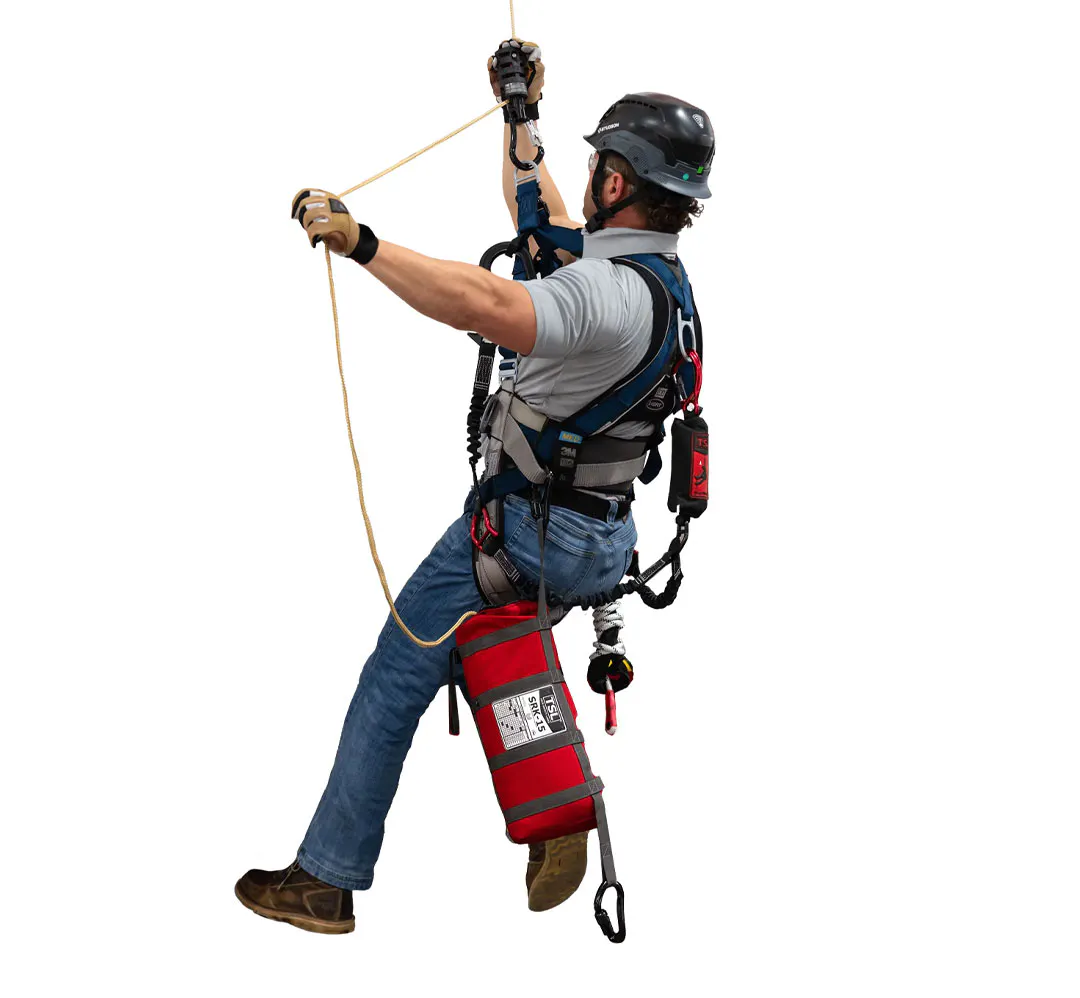
Tech Safety Lines developed the SRK-15® Micro Rescue Kit around this concept.
The compact system is designed for both self-rescue and assisted rescue of workers at height and incorporates TSL's Military Compact Descender® (MCD®) as its personal lowering device.
Rather than requiring a technician to continuously control a traditional manual descent device, the MCD® utilizes a dual-braking design to provide controlled descent while maintaining a compact form factor suitable for personal rescue applications.
For wind technicians working hundreds of feet above ground, portability matters. Rescue equipment stored elsewhere in the turbine cannot provide the same immediate capability as equipment available to the technician when an emergency occurs.
Rescue Equipment Must Match Modern Turbine Heights
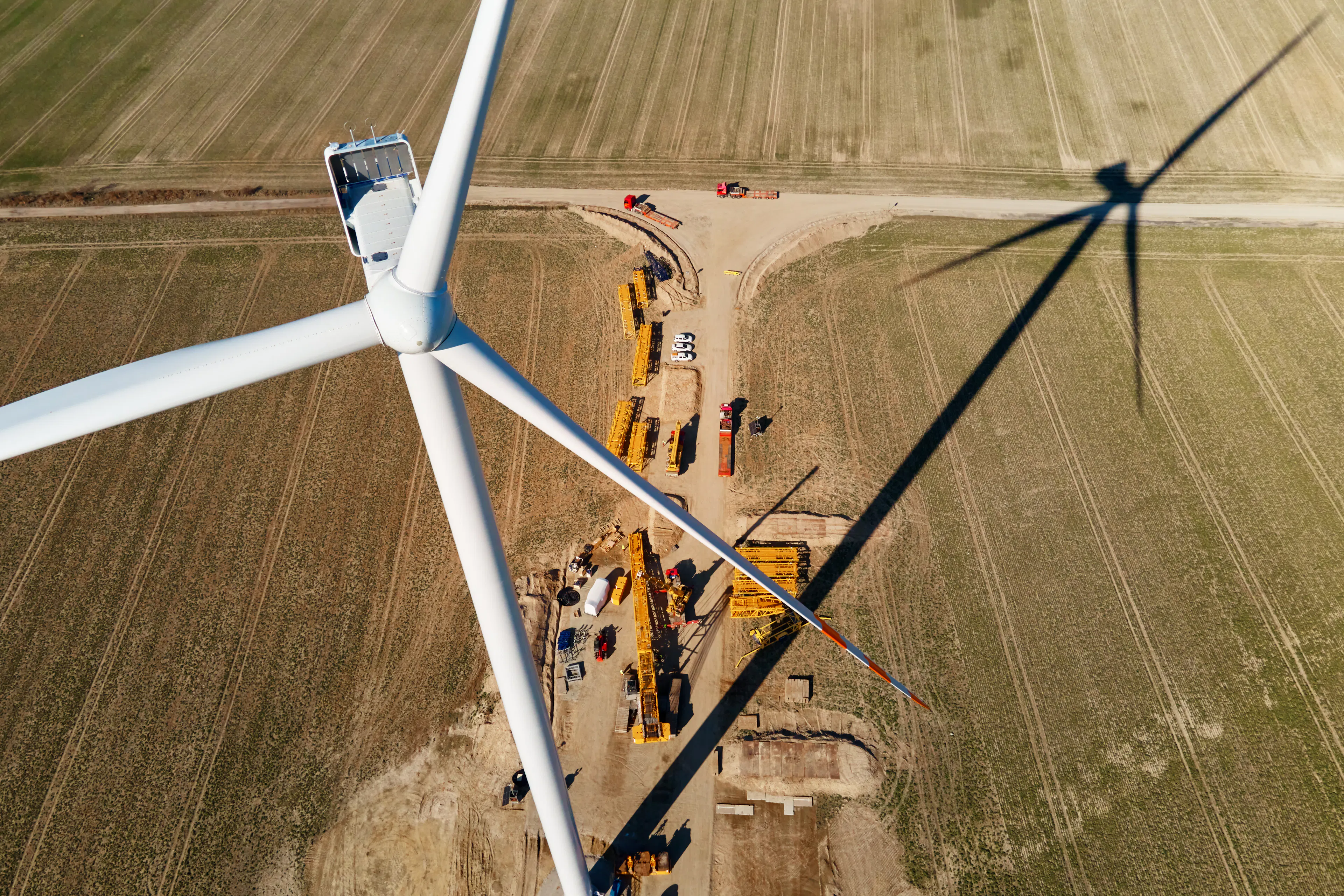
As turbines have increased in height, rescue equipment has had to evolve with them.
The SRK-15® is third-party certified for descents up to 690 feet (210 meters), meeting ANSI/ASSP Z359.9-2021 and EN 341:2011/2D requirements.
Different rope lengths and configurations allow rescue equipment to be selected according to turbine height and operational requirements.
This is an important consideration when evaluating any wind rescue system.
A rescue device may be easy to operate and highly capable, but if the available rope length cannot accommodate the turbine or anticipated evacuation route, it cannot adequately address the hazard.
Self-Rescue and Assisted Rescue
A strong wind rescue program should account for both workers who are capable of evacuating themselves and workers who cannot.
A conscious, uninjured technician may be able to perform an emergency evacuation using a personal descent system.
An injured or incapacitated worker presents a different challenge.
The SRK-15® is designed so the MCD® can also be configured for assisted rescue applications, allowing trained personnel to use the same core system across multiple rescue scenarios.
TSL rescue training incorporates scenarios such as self-rescue, assisted rescue and casualty lowering so technicians learn not simply how the equipment functions, but how its configuration changes depending on the rescue.
That versatility can be especially valuable inside wind turbines, where available space, anchor locations and access routes can restrict rescue options.
Consider the Entire Rescue System
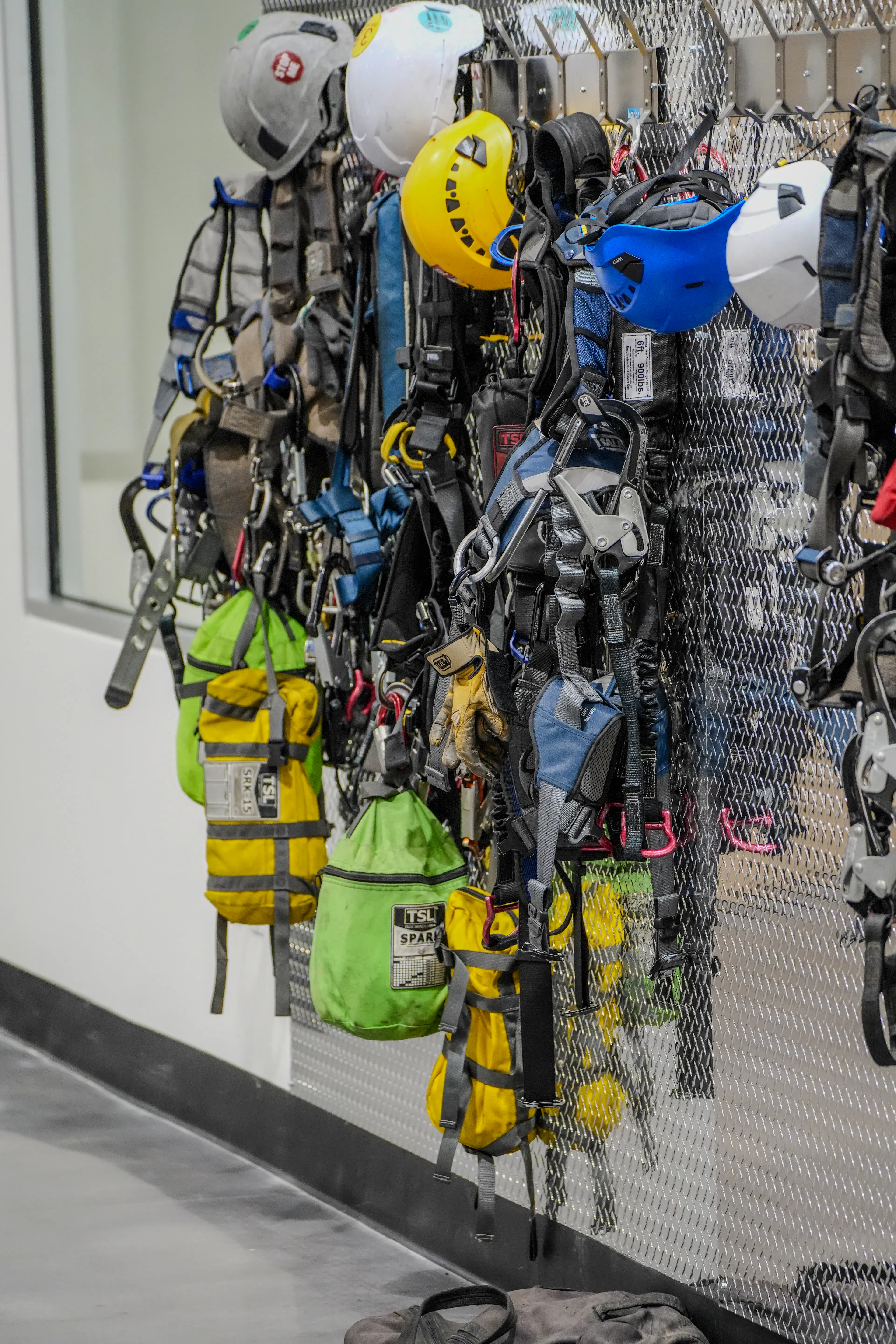
The descender is only one component of a successful rescue.
A complete rescue strategy may involve:
- Appropriate anchor points
- Rescue-rated connectors
- High-strength rope
- Fall protection equipment
- Mechanical advantage systems
- Casualty attachment methods
- Edge management
- Communication
- Pre-emergency planning
- Equipment inspection
- Trained personnel
Depending on the scenario, additional systems may be necessary to raise a casualty, transfer loads or move an injured technician before lowering can begin.
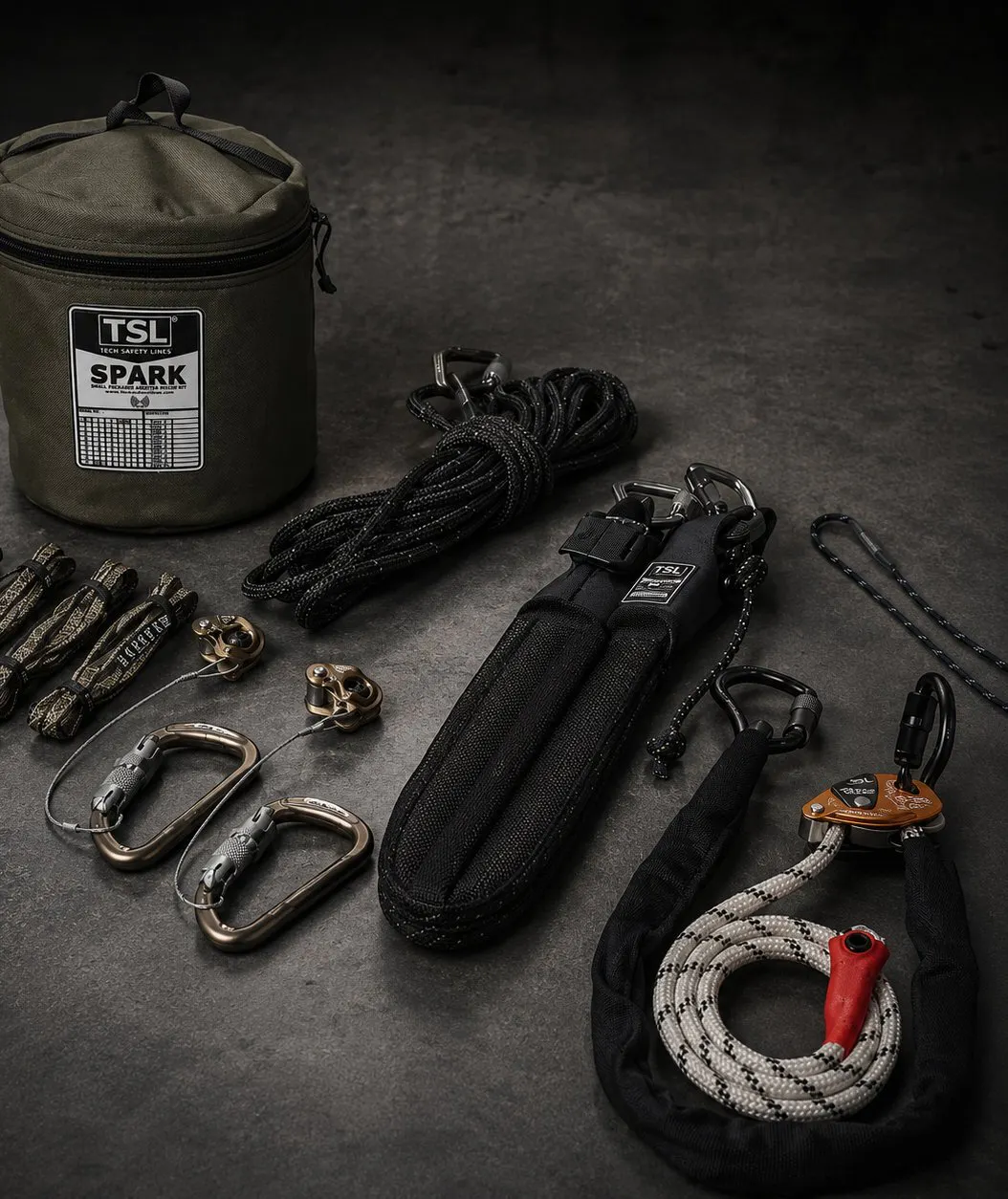
For more advanced assisted rescue applications, Tech Safety Lines also provides equipment and training incorporating systems such as the SPARK, Vertical Lifeline Kit, mechanical advantage systems and StepWise® lanyards.
The important point is that equipment selection should follow the rescue assessment—not the other way around.
View Tech Safety Lines Equipment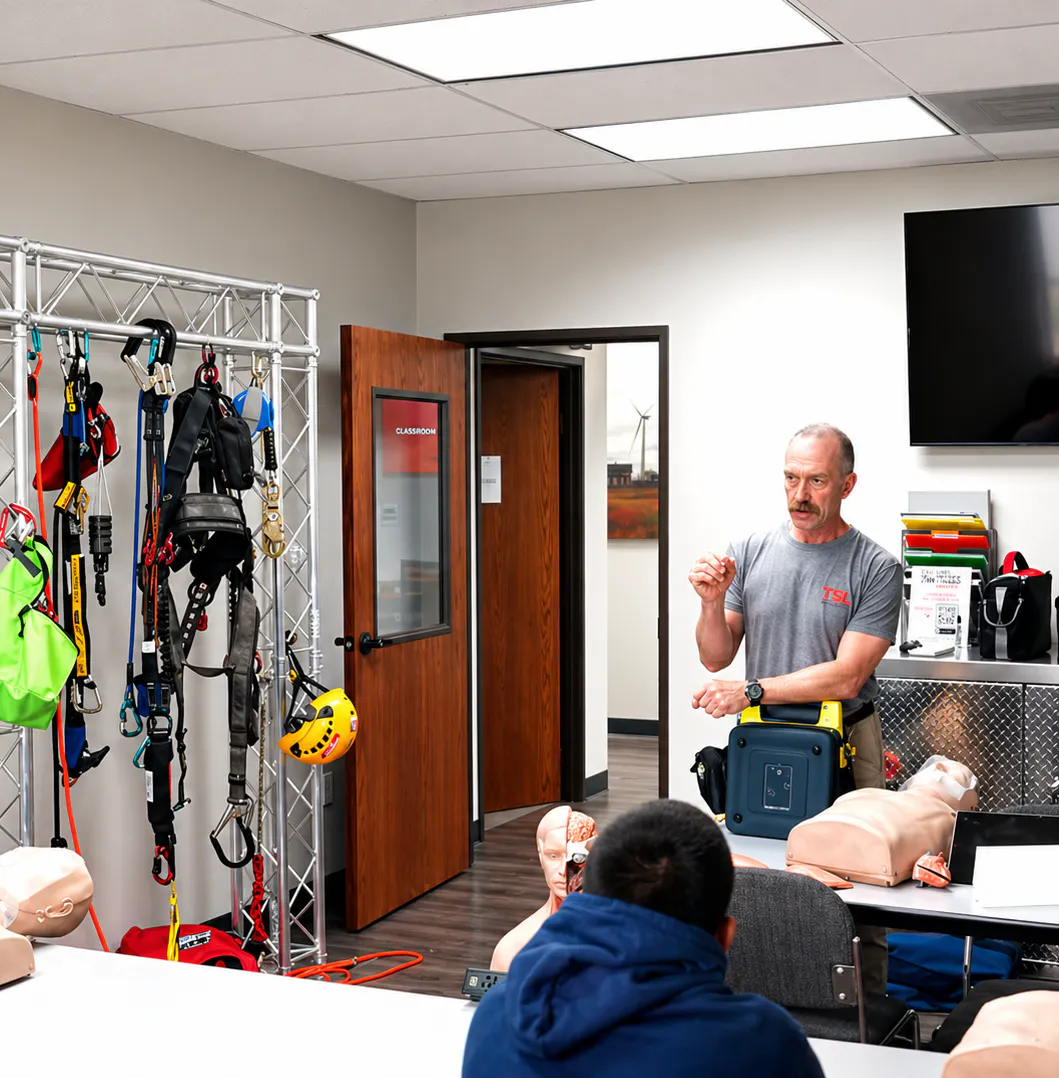
Rescue Equipment Is Only as Effective as the Training Behind It
Even the most capable rescue equipment has limited value if technicians are not confident using it.
During an emergency at height, workers may be dealing with an injured coworker, difficult environmental conditions, limited communication and significant stress. That is not the time to learn how a rescue system operates. Training should create familiarity before an emergency occurs.
TSL's Evacuation & Self-Rescue Training for the Wind Industry focuses on the operation and inspection of the SRK-15®, including hands-on simulated evacuation and rescue scenarios performed on elevated structures.
Technicians learn equipment inspection, operation of the descender, equipment care and maintenance, pre-emergency planning and practical rescue techniques.
More advanced wind rescue courses expand those skills into assisted rescue and more complex casualty-management scenarios. The goal is simple:
When an emergency occurs, the equipment and techniques should already be familiar.
Train for the Turbine, Not Just the Equipment
One of the most important steps in rescue preparation happens before anyone puts on a harness. Organizations should evaluate their actual work environment and ask:
Where could someone become stranded or incapacitated?
Where are suitable anchors located?
How far would a technician need to descend?
Can one technician perform the rescue if necessary?
Could an injured worker need to be raised before being lowered?
Can the system navigate the turbine's structural obstacles?
Does every technician understand how to inspect and deploy the equipment?
Answering those questions helps determine which equipment and training are appropriate for a particular site. It also transforms rescue planning from a compliance exercise into an operational capability.
Building Rescue Readiness Into Wind Operations
Working at height will always carry risk. The objective is to prepare technicians to respond when normal operations become an emergency.
For wind energy companies, that means combining appropriate fall protection, rescue equipment, training and pre-emergency planning into a unified program.
The SRK-15® Micro Rescue Kit and Military Compact Descender® provide wind technicians with a compact solution designed around immediate evacuation, self-rescue and assisted rescue capabilities. Combined with scenario-based training, the system allows organizations to prepare their teams for emergencies before technicians ever climb a turbine.
Because ultimately, selecting rescue equipment isn't about finding one device that can solve every possible problem.
It's about identifying the hazards your technicians actually face, selecting equipment appropriate for those hazards, and ensuring every worker knows how to use it when seconds matter.
Prepare before the climb. Train before the emergency. Be ready to rescue
Click Here To View TSL GWO Training Courses